
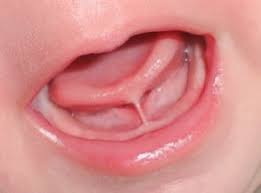
If your newborn struggles to latch, clicks while feeding, or seems hungry again minutes after a feeding ends, you may be dealing with a tongue-tie. It’s one of the most common — and most commonly missed — reasons breastfeeding gets off to a rocky start. Here’s what a tongue-tie in newborns actually is, how to recognize it, and what to do next.
What is a tongue-tie?
A tongue-tie, medically called ankyloglossia, happens when the frenum — the small band of tissue connecting the underside of the tongue to the floor of the mouth — is too short, too tight, or too thick. Instead of moving freely, the tongue stays anchored down, unable to lift, extend, or cup the way a baby needs it to for a deep, effective latch.
Every baby has a lingual frenum. A tongue-tie is simply when that tissue is restrictive enough to limit function — and function, not appearance, is what actually matters for feeding.
Signs your newborn may have a tongue-tie
Because a tongue-tie lives under the tongue, it’s easy for tired new parents (and even some providers) to miss. Watch for:
- Difficulty latching, or repeatedly slipping off the breast or bottle
- Clicking sounds during feeds, or milk leaking from the corners of the mouth
- Painful nursing, or cracked, blistered, or misshapen nipples afterward
- Marathon feeding sessions that still leave baby seeming hungry
- Excessive gas, fussiness, or reflux-like symptoms after eating
- Slow weight gain despite frequent feeding
- A tongue that looks heart-shaped when baby cries, or can’t lift past the gum line
If several of these sound familiar, it’s worth a closer look — not a wait-and-see approach.
What happens if a tongue-tie goes untreated
A tongue-tie doesn’t resolve itself in infancy, and it rarely stays a “small” problem. Left untreated, it can lead to:
- Poor weight gain from a baby who works hard to feed but transfers milk inefficiently
- Painful, damaged nipples and early breastfeeding cessation for mom
- Chronic gas and fussiness from swallowing air during ineffective feeds
- Disrupted sleep for the whole family, as short, frequent, unsatisfying feeds continue around the clock
According to the La Leche League International, an unresolved tongue-tie is one of the most overlooked contributors to early breastfeeding difficulty — which is exactly why a proper tongue-tie and lip-tie evaluation matters so much in the first days and weeks.
“So many parents are told painful nursing is just something to push through. It’s not. If something feels wrong, it’s worth having your baby’s tongue checked.”
— Dr. Gabriela Moffett, Tongue Tie Center
How a tongue-tie is treated in babies
The good news: correcting a newborn tongue-tie is one of the fastest, gentlest procedures in pediatric care. At the Tongue Tie Center, we release the restrictive frenum with a frenectomy — a quick, in-office procedure using an advanced dental laser rather than a scalpel. The laser makes an extremely precise, minimally invasive release, seals tissue as it works, and requires no sedation, shots, or stitches, even for babies just one day old. Most moms notice a deeper, more comfortable latch within minutes of the procedure.
Not sure if it’s a tongue-tie? Start with an evaluation
You don’t need a referral to find out. If your baby is struggling to nurse or bottle-feed, or you’re simply not sure whether what you’re experiencing is normal, a complimentary tongue-tie evaluation can give you real answers — and a clear next step — often the same day.
Book Your Baby’s Complimentary Evaluation
Serving Broward, Miami-Dade, Palm Beach, and all of South Florida. Call 954-722-1100 or schedule online today.